
 Axel Foley
History books often feel like a highlight reel, right? We get the big battles, the famous leaders, the grand declarations. But what about the little things? The accidental discoveries, the forgotten folks who nudged events in unexpected directions, the quirky coincidences that might have just saved the day, or at least made it a lot more interesting? Today, we’re taking a casual stroll off the well-trodden path of historical narratives to uncover some of those hidden gems. Forget dusty dates and dry facts; we’re looking for the stories that make you go, “Wait, really?”
The Accidental Invention That Changed How We See the World
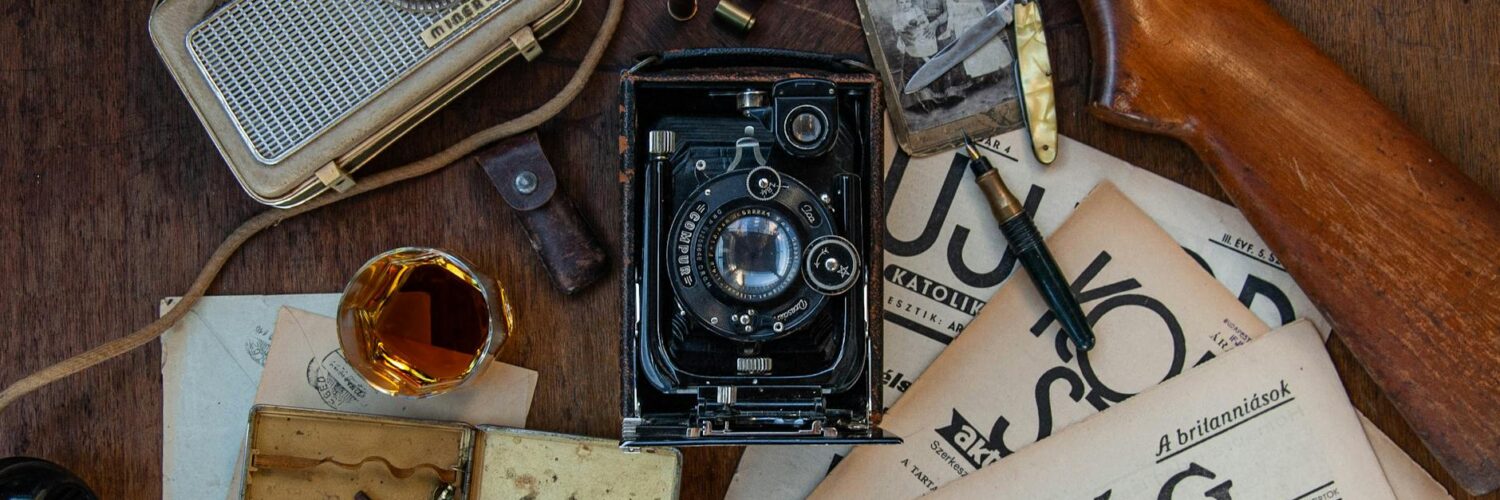
Let’s start with something we probably use every single day without even thinking about it: the camera. We associate early photography with serious portraits and meticulously staged scenes. But the path to capturing images wasn’t exactly a straight line. Take Joseph Nicéphore Niépce, a French inventor who, back in the 1820s, was trying to find a way to automate printing. He experimented with light-sensitive materials, and through a series of, let’s say, “happy accidents” combined with persistent tinkering, he managed to create what is considered the world’s first permanent photograph.
The image, titled “View from the Window at Le Gras,” took about eight hours of exposure time. Eight hours! Imagine trying to get your friends to hold a pose for that long. The truly fascinating part, often overlooked, is that Niépce wasn’t even trying to invent photography as we know it. He was trying to solve a printing problem. His initial efforts were more about creating images that could be transferred to metal plates for mass reproduction. It was only when he realized these light-sensitive bitumen-coated plates could actually *hold* an image permanently that photography as an art form and a science began to truly blossom. It’s a great example of how necessity, and sometimes just plain fiddling around, can lead to revolutionary outcomes.
The “Lost” Letter That Saved a Republic
We often think of pivotal moments in history as grand pronouncements or decisive battles. But sometimes, a single piece of paper, a single message, can be the linchpin. Consider the story of the Roman Republic and the Triumvirate, a power-sharing agreement between Julius Caesar, Pompey, and Crassus. When Crassus died, the balance of power shifted, and Caesar and Pompey became increasingly wary of each other. The Republic was teetering on the brink of civil war.
Historical accounts often focus on the political maneuvering and military buildup. What’s often missed is the tale of a certain messenger named Titus Labienus. Labienus, who had initially been a loyal supporter of Caesar, eventually sided with Pompey. Legend has it that during a critical juncture, Labienus was tasked with delivering a vital message to Pompey detailing Caesar’s troop movements and intentions. However, Labienus, perhaps having second thoughts or realizing the catastrophic consequences of such a civil war, deliberately “lost” the message.
This isn’t a widely documented, confirmed fact in primary sources, which is exactly why it’s so intriguing and often omitted. But the *idea* that a single, potentially intercepted or intentionally misplaced letter could have significantly altered the course of one of the most influential empires in history is captivating. Had Pompey received Labienus’s supposed message, his strategic response might have been different, potentially leading to a different outcome in the ensuing conflict. It’s a reminder that history can sometimes hinge on the actions of individuals whose names we barely recognize, and on the fate of a single piece of parchment.
The Unlikely Hero of the American Revolution: A French Engineer and a Bad Back
When we think of the American Revolution, names like Washington, Jefferson, and Franklin immediately come to mind. But what about the foreign aid that was absolutely crucial to the American victory? France, famously, lent a hand. And within that French aid was a man often reduced to a footnote: Jean-Baptiste de Gribeauval.
Gribeauval was a brilliant military engineer who revolutionized artillery design. His innovations weren’t just about making cannons bigger or more ornate. They were about standardization, interchangeability of parts, and improved mobility. Before Gribeauval, every cannon was essentially a custom job. If a part broke, you had to cast a new one specifically for that cannon. This was inefficient and time-consuming.
Gribeauval introduced a system where parts for different cannons of the same caliber were identical. This meant repairs could be done quickly and easily with a spare part. He also designed lighter, more maneuverable cannons and developed better aiming mechanisms. Now, the curious twist? Gribeauval himself was a bit of an old man by the time he was consulting with the Americans. He suffered from a notoriously bad back, which limited his ability to personally join the fray on the battlefield. However, his “system” of artillery and his training of French officers and engineers had a profound impact. The French artillery that proved so effective in American hands at battles like Saratoga and Yorktown was a direct result of his work. So, a man limited by his physical ailments at home ended up instrumental in the military success of a revolution across the ocean. It’s a testament to how intellectual contributions can be just as potent as physical ones.
The “Mistake” That Led to a Monumental Discovery
Science is full of accidental breakthroughs. Penicillin, famously, was discovered because Alexander Fleming forgot to clean his petri dishes. But there are countless other examples where a perceived error or an unexpected observation paved the way for something huge.
Take Heinrich Hertz. In the late 1880s, Hertz was conducting experiments to prove the existence of electromagnetic waves, a theory proposed by James Clerk Maxwell. He was an exceptionally careful experimenter, and one day, he noticed something peculiar. While working with his spark-gap transmitter, he observed faint sparks in a nearby receiver circuit, even though there was no direct connection. At first, he considered this a nuisance, a sort of interference or a sign that his equipment wasn’t perfectly shielded. Many scientists might have dismissed it or tried to eliminate it.
But Hertz, being the astute observer he was, investigated this “mistake.” He realized that these sparks were evidence that invisible waves were traveling through space from his transmitter to his receiver. He went on to systematically study these waves, demonstrating their reflection, refraction, and polarization – properties similar to light waves. This not only proved Maxwell’s theory but also laid the groundwork for radio, television, and wireless communication. The fact that he didn’t immediately discard the anomaly, but instead pursued it, transformed a potential experimental flaw into foundational scientific proof. It’s a beautiful illustration of how curiosity and a willingness to explore the unexpected can lead to profound discoveries.
The Unsung Contribution to the Printing Press
Johannes Gutenberg is, of course, the name synonymous with the European printing press and its revolutionary impact on the spread of knowledge. His invention of movable type, around the mid-15th century, democratized information and fueled the Renaissance and Reformation. But Gutenberg wasn’t a lone wolf in a shed. He had partners, and his journey was far from smooth.
One figure often relegated to the background is Johann Fust, a wealthy financier who provided Gutenberg with much-needed capital. Fust was a shrewd businessman, and the printing press was a risky venture. He eventually foreclosed on Gutenberg, taking over much of the printing equipment and continuing the business with Gutenberg’s skilled assistant, Peter Schöffer.
Here’s where it gets interesting and often missed: Fust and Schöffer weren’t just passive inheritors. They were innovators in their own right, particularly Schöffer, who was a trained scribe and illuminator. While Gutenberg focused on large-scale mechanical processes, Schöffer’s contributions were more subtle but equally important. He is credited with refining ink formulations to be better suited for metal type, making the printed pages clearer and more durable. He also developed methods for printing in multiple colors, a technique that elevated printed texts beyond simple black-and-white and brought them closer to the aesthetic of illuminated manuscripts.
Furthermore, Fust and Schöffer were instrumental in the commercialization of printing. They established a successful printing business, producing works like the Mainz Psalter in 1457, one of the first books to feature a colophon (a printer’s mark and date of publication) and a truly exquisite multi-colored type. So, while Gutenberg gets the primary credit for the invention, it was the financial backing and subsequent innovation by Fust and Schöffer that truly cemented the printing press’s commercial viability and artistic sophistication, ensuring its widespread adoption. It’s a reminder that big inventions are rarely the work of one person; they are often built upon by a network of collaborators, financiers, and successors, each adding their own vital piece to the puzzle.
So, the next time you’re reading a history book or watching a documentary, remember to look beyond the headlines. History is a vast and complex tapestry, woven with threads of grand ambition, but also with the subtle, often surprising, stitches of chance, error, and unsung effort. These are the stories that breathe life into the past, reminding us that progress isn’t always planned, and sometimes, the most significant events are born from the most unexpected beginnings.





Add comment