
 Axel Foley
We all have a general idea of how nature works, right? Birds fly. Fish swim. Plants need sun. That’s pretty much it. But if you dig a little deeper, the natural world is packed with so many surprising twists and turns that it’ll make you scratch your head and go, “Wait, what?” So, let’s ditch the textbook version of nature and dive into some seriously cool, eye-opening facts that might just change how you see our planet.
The Animal Kingdom: More Than Meets the Eye
When you think of a lion, you picture a mighty hunter, a king of the savanna. But here’s a kicker: those majestic creatures? They spend a whopping 20 hours a day napping. Yes, you read that right. Twenty. Hours. So, next time you’re feeling lazy, just remember you’re practically a lion. And speaking of powerful animals, what about the elephant? We see them as these gentle giants, but did you know they can actually get drunk? If they eat fermented fruit, they can become quite intoxicated. Imagine an elephant stumbling through the jungle, belting out a questionable rendition of “Hakuna Matata.”
Let’s move from the land to the sea. When you think of a shark, you probably think of rows of sharp teeth and a relentless predator. But did you know that some sharks can actually change their sex? Yep, it’s true. Certain species are sequential hermaphrodites, meaning they can start life as one sex and later change to the other. Talk about a biological plot twist! Untamed Truths: Nature's Unexpected Surprises
And what about those seemingly simple creatures, the bees? We know they make honey, but their social structures are ridiculously complex. A single hive can house tens of thousands of bees, each with a specific job, from cleaning the hive to foraging for nectar. They communicate through a “waggle dance,” a sophisticated dance that tells other bees the direction and distance to food sources. It’s like a tiny, buzzing GPS system.
Now, let’s talk about a creature many find creepy: spiders. We often associate them with webs and an eerie silence. But did you know that some spiders can sing? Certain male spiders create vibrations by drumming on leaves or other surfaces to attract females. It’s a serenade to woo their potential mates. Who knew arachnids were such romantics?
Plant Power: More Than Just Pretty Greenery
Plants get a bad rap for being passive. They just sit there, soaking up sun. But they are so much more! Take the Venus flytrap. We think of it as a cool plant that snaps shut on insects. But its “snap” isn’t just a random twitch. It’s a highly coordinated, electrical signal that travels from the trigger hairs to the trap lobes, causing them to close. It’s like a miniature, plant-based Rube Goldberg machine.
Then there are trees. We know they give us oxygen and shade. But did you know trees can communicate with each other? Through a vast underground network of fungi called the “wood wide web,” trees can share nutrients and even send warning signals about insect attacks or disease to their neighbors. It’s like a botanical internet, sharing gossip and resources.
And how about plants that can move? The Mimosa pudica, or “sensitive plant,” famously folds its leaves when touched. But it’s not just a reflex; it’s a way to deter herbivores or reduce water loss. It’s a shy plant, but a very smart one.
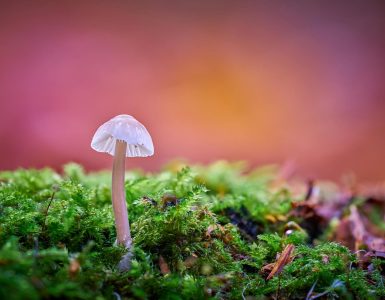
Let’s not forget the fungi. They’re often overlooked, but they’re the unsung heroes of decomposition and nutrient cycling. Some fungi can break down incredibly tough materials, like plastic. Imagine a future where fungi are cleaning up our waste! It’s not science fiction; it’s happening.
Ecosystem Enigmas: The Planet’s Balancing Act
We often think of ecosystems as neat packages, like a rainforest or a desert. But the lines can get blurry, and the interactions are astonishing. Take the Great Barrier Reef. It’s not just a collection of colorful corals; it’s a living, breathing city teeming with life. But here’s something mind-blowing: coral is actually an animal. Yes, these vibrant structures are built by tiny creatures called polyps, which excrete a hard, calcium carbonate exoskeleton. So, when you visit the reef, you’re really visiting a city built by countless tiny animal architects.
Deserts are often seen as barren wastelands, defined by their lack of water. But the creatures that inhabit them are masters of survival. The thorny devil lizard in Australia, for instance, has skin that’s not just spiky for defense. Its skin is designed to channel dew and rainwater towards its mouth, so it essentially “drinks” through its skin. It’s a walking, scaly water harvesting system.
And what about the seemingly simple act of a flower blooming? It’s a complex dance of timing and attraction. Some flowers only bloom at night, relying on nocturnal pollinators like moths and bats. Others have evolved intricate mechanisms to ensure pollination, like the orchid that mimics the scent of a female insect to attract unsuspecting males. It’s a world of deception and seduction, all happening in the plant kingdom.
Consider the humble dung beetle. At first glance, they might seem a bit gross, rolling balls of dung. But they are crucial for their ecosystems, acting as nature’s garbage collectors, recycling nutrients, and preventing the spread of disease. They navigate using the Milky Way, using starlight to find their way. How’s that for cosmic navigation? Planet Earth's Unexpected Guests: Nature's Quirky Surprises and Hidden Talents
Beyond the Obvious: Nature’s Subtle Sorcery
We often look for the dramatic in nature – the roaring lion, the crashing wave. But some of nature’s most incredible feats are subtle. Take bioluminescence, the ability of living organisms to produce light. Fireflies are the classic example, but many deep-sea creatures also glow, using light to communicate, attract prey, or scare off predators. It’s like a secret, underwater light show, happening in the perpetual darkness.
And what about the sheer resilience of life? Even in the harshest environments, like nuclear disaster sites, life finds a way. Tardigrades, also known as water bears, are microscopic creatures that can survive extreme conditions – from the vacuum of space to radiation levels that would kill a human instantly. They can essentially enter a state of suspended animation and come back to life when conditions improve. They are the ultimate survivors.
The natural world is a constant source of wonder, constantly defying our expectations and reminding us how much there is still to learn. It’s a vast, interconnected web of life, full of ingenious adaptations and unexpected behaviors. So, the next time you’re out in nature, take a moment to look a little closer. You might be surprised by the extraordinary in the ordinary.





Add comment