
 Axel Foley
Remember those old black and white sci-fi movies? Flying cars, ray guns, robots doing our chores. For a long time, they felt like pure fantasy, the stuff of Saturday morning cartoons and paperback novels. But if you look around today, it’s pretty wild how much of that “future” has already snuck into our present. Science fiction has always been a powerful mirror, reflecting our hopes and fears about where technology might take us. And guess what? A lot of those wild ideas are starting to feel less like fiction and more like, well, Tuesday.
From Communicators to Your Pocket Communicator
Let’s start with something we all carry around: our smartphones. Back in the day, in shows like Star Trek, Captain Kirk would whip out his trusty “communicator” to beam up Scotty or order a synth-ale. It was a sleek, handheld device for instant communication. Sound familiar? Our smartphones are basically that, and then some. They’re communication hubs, entertainment centers, personal assistants, and even diagnostic tools, all fitting snugly into our pockets. The idea of having a portable device that connects you to anyone, anywhere, instantly was pure sci-fi magic for decades. Now, it’s so commonplace we barely even think about it. We’re constantly connected, sharing our lives in real-time, a concept that would boggle the minds of people just a few generations ago.
AI: The Butler, the Brain, and the Big Question
Artificial intelligence is another massive one. For years, sci-fi writers imagined intelligent machines, from helpful robot butlers like Rosie the maid in The Jetsons to the super-intelligent HAL 9000 in 2001: A Space Odyssey. Today, AI is no longer confined to movie screens. We have AI assistants like Siri and Alexa that can answer questions, play music, and control our smart homes. AI is powering everything from recommendation algorithms on streaming services to sophisticated medical diagnostic tools. We’re seeing AI generate art, write code, and even hold surprisingly coherent conversations. The dream of intelligent machines that can assist and even augment human capabilities is rapidly becoming a reality. Of course, it also brings up the classic sci-fi anxieties: what are the ethical implications? Will AI become too powerful? These are no longer just plot points; they’re real-world discussions happening now.
Virtual Reality: Stepping into Another World
Virtual reality (VR) has been a staple of sci-fi for a long time. Think of the immersive worlds in books like “Ready Player One” or the Matrix. The idea of stepping into a completely different, digital reality was mind-bending. Now, VR headsets are becoming more accessible and the experiences are getting incredibly realistic. We’re using VR for gaming, yes, but also for training surgeons, simulating dangerous environments for military personnel, and even for virtual tourism. Augmented reality (AR), which overlays digital information onto the real world (think Pokémon Go, but more advanced), is also blossoming. These technologies are blurring the lines between the digital and physical, offering glimpses into futures where our interaction with information and entertainment is far more immersive and intuitive.
Biotechnology and the Human Upgrade
Sci-fi has long explored the idea of enhancing human abilities through technology and biology. From cybernetic implants to advanced prosthetics and genetic engineering, stories have mused about humans becoming “more than human.” Today, we’re seeing advances in prosthetics that offer incredible dexterity and sensory feedback, often controlled by thought. Gene editing technologies like CRISPR are opening doors to treating genetic diseases, and while we’re a long way from instant biological upgrades, the ethical and scientific discussions are very much alive. The concept of personalized medicine, tailoring treatments based on an individual’s genetic makeup, is also a direct descendant of these futuristic dreams. We’re starting to understand and manipulate our own biology in ways that were once the exclusive domain of science fiction authors.
Space Travel: Not Just for the Elite
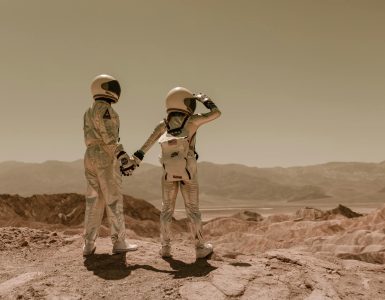
For decades, space travel was the ultimate sci-fi frontier – vast starships, distant galaxies, and the dream of colonizing other planets. Shows like Star Trek and movies like Star Wars painted vivid pictures of humanity venturing beyond Earth. While we aren’t zipping between stars in warp drives just yet, the private space industry has exploded. Companies like SpaceX are making space travel more accessible, launching satellites, ferrying astronauts to the International Space Station, and even talking about regular trips to the Moon and Mars. The idea of space tourism, once a far-off fantasy, is slowly becoming a reality. The ambition to become a multi-planetary species, a classic sci-fi goal, is now a tangible objective being pursued with increasing fervor. Sci-Fi's Whispers: Tomorrow's Tech, Today's Echoes – A Casual Look at the Future
Smart Homes and the Connected Life
Think about the futuristic homes depicted in sci-fi – appliances that talk to you, lights that adjust themselves, robots that clean. Our modern smart homes are the living embodiment of these ideas. Voice-activated assistants control our lights, thermostats, and entertainment systems. Smart refrigerators can tell us when we’re low on milk, and robotic vacuum cleaners are a common household item. The seamless integration of technology into our living spaces, making life more convenient and efficient, was a sci-fi dream that’s rapidly materializing. It’s a subtle but powerful way science fiction has shaped our expectations of domestic life.
The Blurring Lines: What’s Next?
What’s truly fascinating is how these trends are not happening in isolation. AI is enhancing VR experiences, biotechnology is intertwined with space exploration, and our connected smart homes are becoming more intelligent thanks to AI. The future that science fiction authors envisioned was often a complex tapestry of interwoven technologies, and that’s precisely what we’re starting to see unfold.
So, what’s on the horizon that still feels like pure sci-fi but might be just around the corner? Think about true neural interfaces – devices that allow direct communication between the brain and computers, bypassing physical input. This could revolutionize how we interact with technology and even how we understand consciousness. We’re also talking about advanced robotics that are indistinguishable from humans, not just in appearance but in their ability to understand nuance and emotion. The ethical and societal implications of such advancements are immense and were core themes in many classic sci-fi stories.
And then there’s the ultimate sci-fi dream: time travel. While current physics suggests it’s highly improbable, the theoretical groundwork and the enduring human fascination with it mean it will likely remain a powerful narrative engine for future stories. Perhaps, as our understanding of physics deepens, what seems impossible today will become merely a complex engineering challenge tomorrow. Sci-Fi's Surprisingly Accurate Predictions: Is the Future Already Here?
A Continuous Feedback Loop
It’s a continuous feedback loop. Science fiction inspires inventors and scientists to push boundaries, and as technology advances, it provides new fuel for imaginative storytelling. The future isn’t just something that happens to us; it’s something we actively create, often with a little help from the wild ideas dreamed up on the page or screen. So, the next time you’re chatting with your virtual assistant or exploring a new world in VR, take a moment to appreciate how far we’ve come, and how much of that journey was paved by the boundless imagination of science fiction.





Add comment