 Axel Foley
We live in a world absolutely bursting with science and technology. From the smartphone in your pocket to the complex systems that deliver your morning coffee, it’s everywhere. But beyond the obvious, there’s a whole universe of mind-bending facts and astonishing realities that most of us zip right past. Let’s dive into some of that weirdness, the stuff that makes you tilt your head and go, “Huh, really?”
The Universe’s Loudest Joke: Black Holes Aren’t Silent
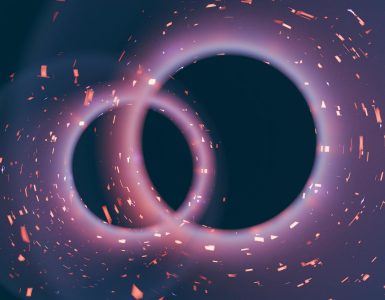
When you think of a black hole, you probably imagine a cosmic vacuum cleaner, silent and terrifying. And in a way, they are. But did you know that black holes actually make noise? Not in a way we can hear with our ears, of course. Black holes are regions of spacetime with such strong gravity that nothing, not even light, can escape. When a supermassive black hole at the center of a galaxy gobbles up surrounding gas and dust, it creates ripples in space. These ripples, called gravitational waves, are like the universe’s hum. Scientists have detected these waves and translated them into sound. The famous “sound” of the black hole in the Perseus galaxy cluster is a deep, droning hum. It’s the lowest note ever detected, far below the range of human hearing, but it’s there – a cosmic opera playing out in the silence for those who can listen.
Your Own Personal Universe: The Gut Microbiome
You’re not just you. You’re a walking, talking ecosystem. Inside your digestive tract live trillions of tiny organisms: bacteria, fungi, viruses. This is your gut microbiome, and it’s more than just a passive passenger. These microbes play a crucial role in everything from digesting your food and absorbing nutrients to training your immune system and even influencing your mood. In fact, there are more microbial cells in your body than human cells! Some scientists even talk about the gut as a “second brain” because of the complex communication happening between the gut and the brain via the vagus nerve. So, the next time you feel a gut feeling, remember it might be your microscopic roommates sending a message.
The Internet: A Giant, Messy Library of Everything
We use the internet every second of every day, but how much do we really understand about what it is? It’s not a single entity, like a big computer somewhere. It’s a vast, interconnected network of billions of devices. And it’s surprisingly inefficient. Think of it like sending a letter. Your message gets broken down into tiny packets of data, each finding its own way through a maze of routers and servers to reach its destination. Sometimes, packets take wildly different routes, or even get lost and have to be resent. It’s a marvel of engineering that it works at all, and that it has transformed our world so profoundly. And here’s a mind-blower: if you could print out the entire internet today, it would be so thick it would reach the moon and back about 250 times! Beyond the Textbook: Surprisingly Strange Science & Tech
Is Your Coffee Magic? The Science of Flavor
That delicious cup of coffee isn’t just hot water and beans. It’s a symphony of chemical reactions. Roasting coffee beans unlocks hundreds of aromatic compounds. The way those compounds interact with your taste buds, combined with the temperature of the coffee and even the aroma hitting your nose, creates that complex flavor. And here’s a fun fact: the flavor of your coffee can change depending on the color of your mug. Studies have shown that people perceive coffee in a red mug as sweeter, while coffee in a blue mug is perceived as more bitter. Our brains are incredibly susceptible to sensory cues, and even a splash of color can alter our entire experience.
The Ocean’s Ghostly Signals: Bioluminescence
The deep ocean is one of the last truly unexplored frontiers on Earth. And what lurks down there is truly alien. One of the most astonishing phenomena is bioluminescence – the ability of living organisms to produce their own light. From glowing jellyfish and anglerfish with their built-in lures to tiny plankton that light up when disturbed, the deep sea is a galaxy of living light. This isn’t just for show. It’s used for communication, attracting prey, deterring predators, and camouflage. Imagine swimming through an abyss where every flicker and glow is a silent conversation between creatures millions of years in the making.
Your Brain’s Amazing Recycling Program: Neuroplasticity
For a long time, scientists believed that the adult brain was pretty much fixed. Once you hit a certain age, your brain was done growing and changing. Not true! Your brain is incredibly adaptable, a phenomenon called neuroplasticity. Even as an adult, your brain can rewire itself, form new connections, and even create new neurons. Learning a new skill, recovering from an injury, or even just changing a habit, all require your brain to physically change. It’s like having a super-powered construction crew working constantly to optimize your neural pathways. This means that you can literally change your brain throughout your entire life. If that’s not mind-blowing, what is?
The Internet of Things: Your Toaster is Watching You (Sort Of)
We’re not just connecting ourselves to the internet anymore; we’re connecting our *things*. The Internet of Things, or IoT, refers to everyday objects – from thermostats and refrigerators to cars and even toothbrushes – that are embedded with sensors, software, and other technologies that enable them to connect and exchange data with other devices and systems over the internet. It sounds a bit sci-fi, but it’s already here. Your smart speaker can control your lights, your watch can track your sleep, and your fridge might tell you when you’re out of milk. The potential is enormous for convenience and efficiency, but it also raises some serious questions about privacy and security. Just remember, your smart toaster might be a lot smarter than you think.
The Silent Power of Ant Matter
Ants are tiny, but their collective power is immense. A single ant might seem insignificant, but an ant colony is a superorganism. They can move objects many times their own weight, build complex nests, and even work together to tend to their young and defend their territory. The efficiency and coordination of an ant colony are truly astonishing. Scientists have studied how they communicate using pheromones – chemical signals – to leave trails, warn of danger, and coordinate tasks. It’s a level of intricate, decentralized organization that human societies still strive for. If we could harness even a fraction of that coordination, imagine what we could achieve.
Space is Not Empty: The Cosmic Web
When we look up at the night sky, we see stars and galaxies scattered across a vast blackness. But that blackness isn’t truly empty. The universe is structured by something called the cosmic web. This is a vast, intricate network of matter, primarily dark matter and gas, that stretches across billions of light-years. Galaxies are not randomly distributed; they tend to cluster along the filaments of this web, like beads on a cosmic string. The spaces between these filaments are vast, almost empty voids. So, while space is immense, it also has a hidden structure that dictates where everything else is located. Hidden Wonders: Cool Science and Tech Stuff You Didn't Know
The Future is Already Here: 3D Printing Organs
Organ donation waiting lists are a grim reality. But what if we could print replacement organs? This isn’t science fiction anymore. Researchers are making incredible progress in 3D printing biological tissues and even complex organs. Using bio-inks made of living cells, scientists can layer them to create structures that mimic human organs. While printing a fully functional, transplantable organ is still a significant challenge, the progress is breathtaking. We’re talking about creating personalized tissues for drug testing, repairing damaged organs, and, eventually, printing entire organs on demand. The implications for medicine are revolutionary.
So, the next time you’re looking around, remember that beneath the surface of the everyday, there’s a universe of astounding science and technology, quietly shaping our lives in ways we might not even realize. And the really cool part? It’s all still unfolding, with more mind-blowing discoveries waiting just around the corner.



Add comment