
 Axel Foley
We navigate our world surrounded by things so common, so utterly expected, that we rarely pause to consider their hidden depths. Think of it like a comfortable old armchair – you know exactly where the springs are, but have you ever wondered how they *got* there? Let’s pull back the curtain on some of these everyday facts and sprinkle in some delightful trivia that might just make you see your surroundings a little differently.
The Humble Pen: More Than Just Ink
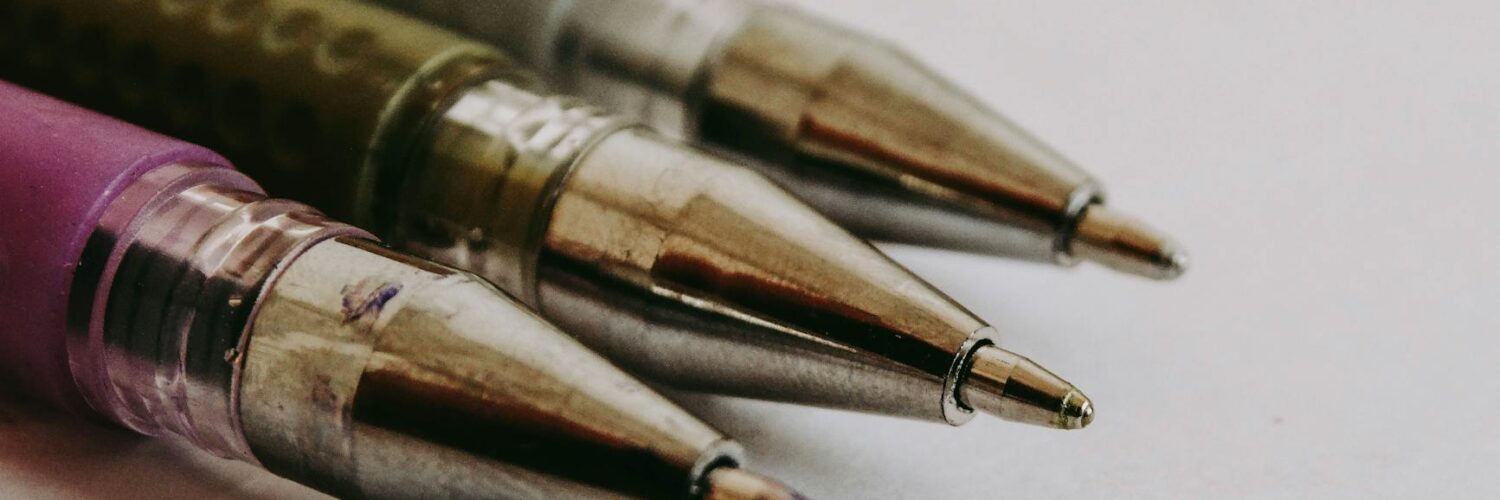
You’ve probably scribbled a million notes, signed countless documents, and doodled your way through boring meetings with a ballpoint pen. We expect them to write, and they do. But did you know that most ballpoint pens contain a tiny air hole? It’s not a manufacturing defect; it’s a crucial design element. This hole prevents the ink cartridge from creating a vacuum as the ink is used, ensuring a smooth flow. Without it, your pen would likely sputter and die mid-sentence. Pretty neat, right? It’s a tiny piece of engineering ensuring your thoughts can keep flowing.
And here’s a piece of trivia that might blow your mind: the inventor of the ballpoint pen, László Bíró, was a Hungarian-Argentine journalist. He hated how fountain pens smudged and took forever to dry. By observing children playing with toy cars that left ink trails, he got the idea for a roller-ball mechanism. The rest, as they say, is history. So next time you grab a pen, remember the journalist who wanted to make jotting down ideas a little less messy.
Why Do We Say “Bless You” After a Sneeze?
Ah, the sneeze. An involuntary expulsion of air that often elicits a polite “Bless you” or “Gesundheit.” We expect this social exchange, a reflex of courtesy. But where does it come from? The origins are surprisingly varied and a little bit chilling. One widely accepted theory traces it back to the plague in the 6th century. Pope Gregory I reputedly ordered prayers and blessings to be said after a sneeze, believing it was an early symptom of the bubonic plague. Sneezing was seen as the body trying to expel evil spirits or signs of impending doom.
Another, more ancient, belief was that a sneeze could expel your soul from your body, leaving you vulnerable. The blessing was a way to ward off evil spirits attempting to capture that escaping soul. Talk about a high-stakes sneeze! It’s fascinating to think that a simple habit we perform without a second thought has roots in ancient fears and desperate attempts to ward off disease and the supernatural. Why Do We Yawn and Is It Contagious?
The Secret Life of Pockets
Pockets. They’re just there, aren’t they? A place to stash your keys, your phone, maybe a rogue piece of lint. We expect them to be functional, and mostly, they are. But have you ever noticed that the little pocket inside your jeans pocket is slightly different from the main one? That tiny pocket, often called a “watch pocket” or “fifth pocket,” was originally designed for pocket watches in the late 19th century. Levi Strauss & Co. started adding them to their jeans in 1879.
It’s a piece of sartorial history, a relic of a time when men carried their timepieces in their pockets. While pocket watches are largely obsolete, the tiny pocket persists. It’s a charming anachronism, a little secret stitched into the fabric of our everyday wear, reminding us of a past era. Imagine, your jeans are carrying a ghost of a fashion trend!
The Mysterious Hum of Refrigerators
That low, steady hum your refrigerator makes. It’s so constant, so expected, that it becomes part of the background noise of our lives. But what *is* that sound? It’s the sound of your fridge working hard to keep your food fresh. Inside that humming box, a complex system is at play. The compressor is the heart of it all, pumping refrigerant through coils. This refrigerant absorbs heat from inside the fridge and releases it outside, effectively transferring heat from your food to your kitchen. The hum is primarily the sound of the compressor motor and the fan circulating air. Everyday Oddities: Stuff You Know, But Maybe Not *Why* You Know It
Beyond the basic mechanics, here’s some fun trivia: older refrigerators used a highly flammable gas called isobutane as a refrigerant. While efficient, it was also a bit of a fire hazard. Modern fridges use much safer, although less environmentally friendly, refrigerants like HFCs, and newer models are exploring even greener alternatives. So, that seemingly simple hum is actually a sophisticated dance of thermodynamics, all to keep your milk cold and your leftovers from going bad.
Why are Traffic Lights Red, Yellow, and Green?
We expect traffic lights to guide us, to tell us when to stop and go, and we expect them to use those specific colors: red, yellow, and green. But have you ever wondered *why* those colors, and in that order? The choice of colors for traffic signals has a long history. The earliest traffic signals, used on railways, employed red for “stop” and green for “caution.”
When automobiles came along, the system had to adapt. Red was universally associated with danger and stopping, making it the obvious choice for “stop.” Green, while initially used for caution, was switched to “go” because it was more visible in fog and at night than white (which was previously used for “go” and could be mistaken for a distant light). Yellow (or amber) was introduced as a warning signal to prepare for the impending stop, bridging the gap between green and red. It’s also worth noting that red and green are at opposite ends of the visible spectrum, making them easily distinguishable even for people with common forms of color blindness, which is crucial for road safety.
The “Blind Spot” in Your Vision
You have a blind spot. Right there, in the middle of your vision. We don’t typically notice it because our brains are geniuses at filling in the gaps. We expect our vision to be a continuous, seamless experience, but biologically, it’s not. Each eye has a blind spot where the optic nerve leaves the retina. There are no photoreceptor cells (rods or cones) in this area, meaning it cannot detect light.
The trivia here is that your brain is constantly compensating. It takes information from your other eye and uses patterns from the surrounding area to “paint” a complete picture. You can even find your own blind spot with a simple experiment. Close your left eye, stare at a dot on a piece of paper, and move a second object (like another dot or a small shape) away from the first one. At a certain point, the second object will disappear. It’s a testament to our brain’s incredible processing power that we are largely unaware of this built-in visual void.
The Origin of “OK”
The word “OK” is perhaps the most universally understood expression on the planet. We expect to use it, to hear it, to see it in texts and emails. But its origin story is surprisingly specific and a bit of a linguistic accident. “OK” is believed to have originated as a humorous abbreviation. In Boston around 1839, there was a fad for playful abbreviations spelled incorrectly. “OK” stood for “Oll Korrect,” a jocular misspelling of “all correct.”
It gained significant traction during the 1840 U.S. presidential election when supporters of Martin Van Buren, nicknamed “Old Kinderhook” after his birthplace, formed “O.K. Clubs.” This political boost propelled the term into widespread use. So, the next time you give an “OK,” you’re not just agreeing; you’re participating in a linguistic ripple effect that started with a joke and a presidential campaign.
The Unassuming Rubber Band
Rubber bands. They’re everywhere, holding things together, keeping stacks of papers neat, securing hair. We expect them to be stretchy and elastic, and they are. But the process to make them so is a bit more involved than it seems. Natural rubber, derived from the latex of rubber trees, is brittle and sticky. To make it useful, it must undergo vulcanization, a process discovered by Charles Goodyear in the 1830s.
Vulcanization involves heating rubber with sulfur. This process creates cross-links between the rubber molecules, transforming the material into a much stronger, more durable, and elastic substance. Without vulcanization, rubber bands as we know them wouldn’t exist; they’d likely be gooey messes. It’s a chemical transformation that gives this everyday object its essential property of resilience.
The Mystery of Sleeping on Your Side
We all sleep. We expect to drift off into dreams for a chunk of our day, and often, we find ourselves naturally curling up on our sides. But why is this so common? Sleeping on your side, particularly the left side, is often recommended for several reasons. For pregnant women, sleeping on the left side is encouraged because it improves circulation to the fetus, uterus, and kidneys. It also reduces pressure on the liver.
For many people, it can also aid digestion and reduce heartburn. The stomach is positioned in a way that allows gravity to help move waste through the intestines and prevents stomach acid from flowing back up into the esophagus. While stomach and back sleeping have their proponents, side sleeping is the most common sleeping position globally, and it seems our bodies have evolved to find it quite comfortable and beneficial for various physiological processes.
So, the next time you reach for that pen, utter “Bless you” after a sneeze, or just settle into bed, take a moment. The ordinary is often teeming with extraordinary stories, ingenious designs, and fascinating historical echoes. The world around us is far more intricate and surprising than we might expect.






Add comment